
XR Sports Gaming Isn’t a Perk — It’s a Strategic Wellness Investment for South African Workplaces

Updated: Feb 12
Corporate wellness is no longer optional. Across industries, organizations are investing in employee well-being to reduce burnout, improve productivity, and retain top talent.
But here’s the uncomfortable truth:
Most wellness programs exist.
Few truly engage employees.
Participation rates in traditional wellness initiatives remain low. Meditation apps go unused. Gym subsidies are forgotten. Wellness talks are attended once, then ignored. Meanwhile, workplace stress, particularly in high-pressure regions like Gauteng, continues to rise.
So the question becomes:
What actually works?
The answer lies in movement, engagement, and accessibility — all delivered in a format employees genuinely want to participate in.
That’s where XR sports and fitness gaming changes the game.

The Missing Link in Workplace Wellness: Physical Movement
Research consistently shows that physical activity is one of the most powerful interventions for both physical and mental health.
Regular movement:
Reduces chronic health risks
Improves cardiovascular health
Increases daily energy levels
Enhances focus and cognitive performance
Improves sleep quality
Yet modern corporate environments are built around prolonged sitting, high cognitive load, and limited physical activation.
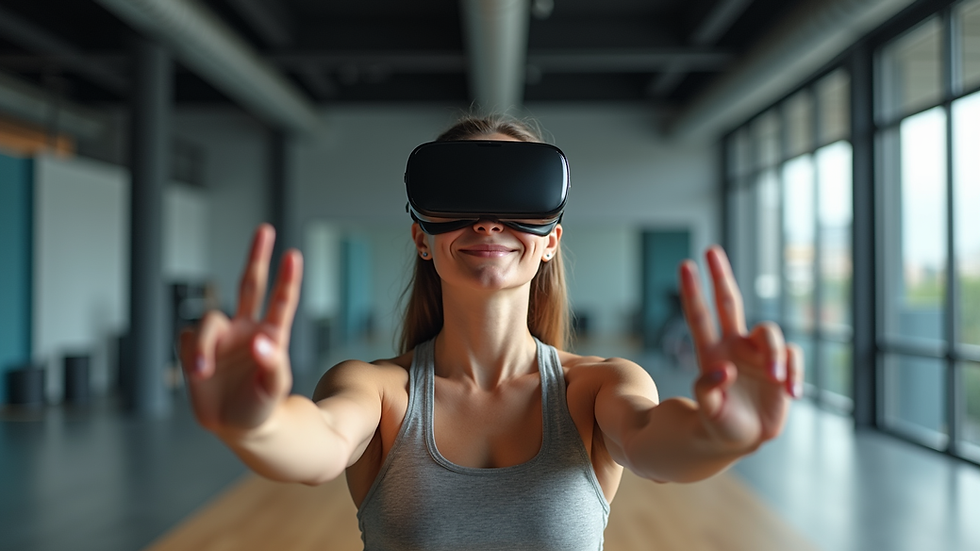
XR sports and fitness gaming, including virtual cycling and running via MyWhoosh simulators and immersive VR experiences on Meta Quest 3, reintroduce movement into the workday in a way that feels energizing, not obligatory.
This isn’t passive screen time.
It’s full-body engagement.
Employees cycle. Box. Dodge. Sprint. Sweat.
And that physiological activation translates directly into improved energy and resilience.
Engagement & Fun: Solving the Participation Problem
One of the biggest challenges in corporate wellness isn’t funding — it’s engagement.
Many programs see participation rates as low as 20–30%. The issue isn’t awareness. It’s motivation.
XR fitness gaming introduces:
Novelty
Gamification
Friendly competition
Immediate feedback
Immersive environments
When wellness becomes interactive and competitive, participation naturally increases.
Employees don’t feel like they’re attending a health initiative. They feel like they’re stepping into a challenge.
That shift — from obligation to experience — is what drives higher engagement and ultimately, better ROI.
Stress Relief That Actually Works
High-stress industries dominate Gauteng’s corporate landscape — finance, tech, legal, consulting, and executive leadership environments where performance pressure is constant.
Physical activity is clinically linked to:
Reduced cortisol (stress hormone) levels
Improved mood regulation
Lower anxiety
Better emotional resilience
Unlike passive stress-relief methods, immersive XR sport requires focus and physical output. It pulls employees out of cognitive overload and into embodied action.
Boxing in VR.
Cycling through virtual terrain.
Competing in rhythm-based fitness challenges.
These experiences create a mental reset.
Employees return to work:
Energized
Clear-headed
Socially connected
That reset effect is invaluable in high-burnout environments.
Accessibility: Removing the “No Time” Barrier
Time is the most cited barrier to wellness participation.
Employees say:
“I’m too busy.”
“I’ll go after work.”
“I’ll start next week.”
And they rarely do.
On-demand XR sports events remove that barrier entirely.
The experience comes to the workplace.
Portable equipment is set up on-site.
Sessions are structured and time-efficient.
HR teams don’t need to manage logistics.
Wellness becomes integrated into the workday instead of competing with it.
Accessibility dramatically increases participation — and participation is what drives outcomes.
Social & Inclusive: Strengthening Workplace Culture
Wellness isn’t just about physical health. It’s about connection.
Group-based XR sports events encourage:
Team bonding
Cross-department interaction
Friendly competition
Shared achievement
Unlike solitary gym sessions, these activations are social experiences.
Employees cheer each other on.
Teams compete.
Colleagues connect outside of task-based interaction.
That sense of community strengthens workplace culture — one of the strongest predictors of retention and engagement.
When employees feel cared for and connected, they stay.
From Activity to Strategic Investment
When you connect the research to real-world workplace needs, the picture becomes clear.
XR sports gaming addresses multiple corporate pain points simultaneously:
✔ Physical movement in sedentary environments
✔ Higher participation through engagement✔ Stress reduction through embodied activity
✔ On-site accessibility
✔ Cultural enhancement through shared experiences
This isn’t entertainment disguised as wellness.
It’s movement-powered performance enhancement.
For South African employers, particularly in high-stress industries, investing in immersive, on-demand XR fitness experiences is not just about offering something new. It’s about implementing a modern, high-engagement intervention that drives measurable well-being outcomes.
The Future of Workplace Wellness Moves
Wellness is evolving.
Employees no longer want passive programs.
They want experiences.
They want energy.
They want something that feels different.
XR sports and fitness gaming transforms abstract wellness statistics into lived, physical experiences that employees actually show up for.
Because the future of workplace wellbeing isn’t sitting still.
It’s moving.
Compiled from:


header.all-comments